
Knock-Down vs. Welded Furniture Frames: A Shipping Cost Analysis
Knock-down vs welded furniture frames: how the choice affects freight cost, damage rates, and warehouse efficiency for importers—plus when each makes sense.

For furniture importers, freight is often the silent margin-killer. Two identical-looking tables can have wildly different landed costs depending on one design decision: whether the frame ships assembled (welded) or flat-packed (knock-down). This analysis breaks down the real cost tradeoffs so importers and brands can make the right call before placing an order.
Welded vs. knock-down: the core difference
A welded frame arrives as a single rigid assembly—strong, stable, and ready to use, but bulky and air-heavy to ship. A knock-down (KD) frame ships as flat components that the end customer or warehouse assembles, dramatically reducing shipping volume. The choice affects freight cost, damage rates, assembly labor, and even the customer’s unboxing experience.
The shipping math that matters
Ocean and air freight are priced on whichever is greater: actual weight or volumetric (dimensional) weight. Furniture is almost always volume-limited—a container fills up with empty space long before it hits its weight limit. This is where knock-down design wins decisively.
A welded table base might ship four units to a carton’s worth of space. The same base designed as knock-down can often ship two to three times as many units in the same volume, because the flat components nest tightly with no wasted air. For a full container, that can mean the difference between shipping 400 units and 1,000 units—slashing the per-unit freight cost by more than half.
Beyond freight: the hidden savings
Lower damage rates
Flat-packed components in tight cartons move less in transit, so they suffer fewer dents, scratches, and bent parts. Welded assemblies with protruding legs are far more prone to shipping damage—and every damaged unit is a return, a replacement, and a margin loss.
Warehouse efficiency
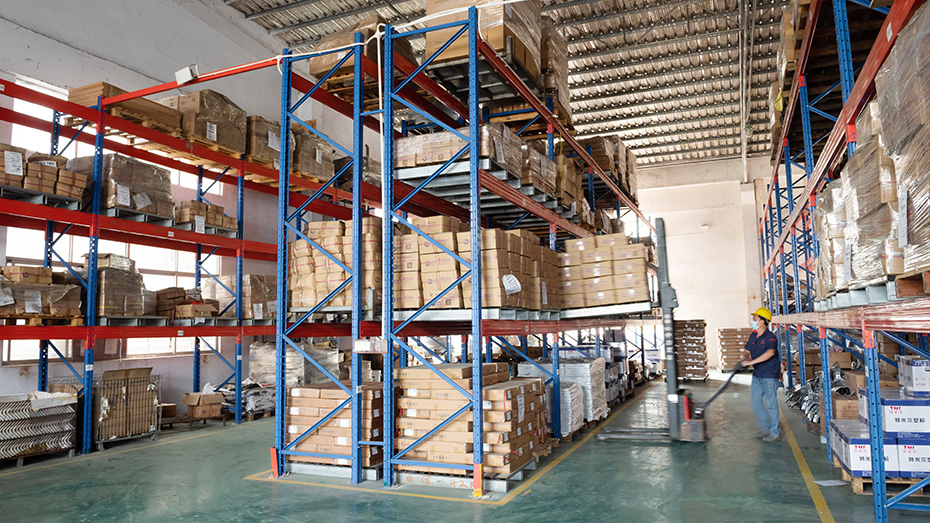
Knock-down inventory takes up less warehouse space, cutting storage costs and making stock easier to handle. For e-commerce brands especially, flat-pack cartons are simpler and cheaper to store and re-ship.
When welded still wins
Knock-down isn’t always the answer. Welded frames make sense when maximum rigidity is non-negotiable, when the end customer can’t be expected to assemble anything, or for heavy commercial pieces where a welded joint’s strength is a selling point. Some hospitality buyers specifically want ready-to-place furniture with zero assembly. The key is matching the construction to the customer.
The engineering catch: KD is only as good as its hardware
Here’s what many importers learn the hard way: a knock-down frame is only worthwhile if it reassembles rigidly, without wobble. Cheap connection hardware produces tables that feel loose and cheap—undoing all the freight savings with returns and complaints. Precision-engineered connectors, accurate tolerances, and well-designed joints are what separate a KD product that feels solid from one that feels flimsy. This is a core manufacturing competency, not a commodity.
Making the decision
- Choose knock-down when freight cost is a major factor, you ship internationally at volume, or you sell through e-commerce.
- Choose welded when maximum rigidity, zero-assembly delivery, or heavy commercial strength is the priority.
- Either way, insist on precision connection hardware—it determines whether the finished product feels premium or cheap.
At OneNest, our KAIXIANG and SHENHUI divisions engineer both welded and knock-down metal frames, with precision connectors designed for rigid, wobble-free reassembly and efficient flat-pack shipping. Whether you’re optimizing freight cost or maximizing strength, our engineering team can spec the right construction for your product and your logistics.