
Metal vs. Nylon 5-Star Chair Bases: Which Lasts Longer?
Metal vs nylon 5-star chair bases compared: strength, load capacity, perceived quality, cost, and corrosion. How to choose the right base material for your chair line.

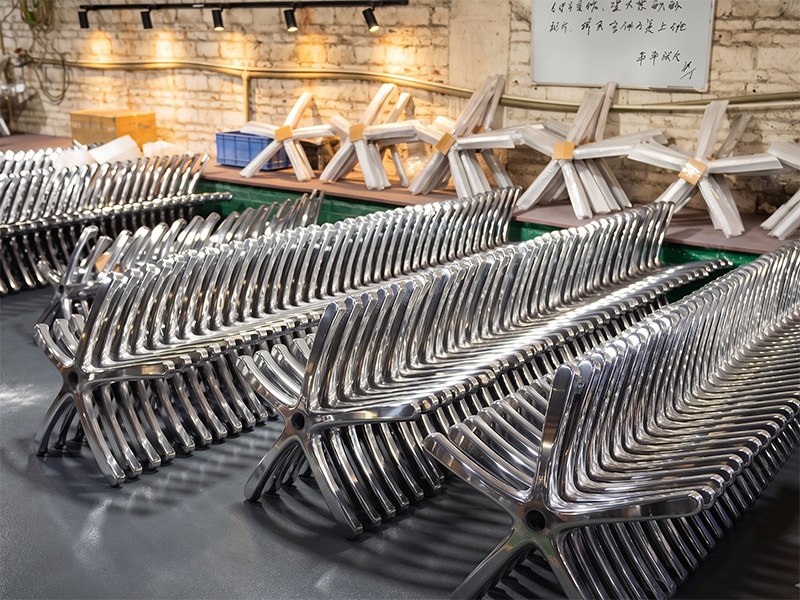
When sourcing 5-star chair bases, the first fork in the road is material: die-cast metal or reinforced nylon. Both can pass the same safety standards, yet they produce very different products in terms of feel, cost, and positioning. This article breaks down the real-world differences so you can match the right material to your chair line and price point.
The short answer
Metal 5-star chair bases win on premium feel, rigidity, and perceived value. Reinforced nylon bases win on cost, weight, and corrosion resistance. Neither is universally “better” — the right choice depends entirely on where your chair sits in the market. A heavy-duty metal 5-star chair base belongs under an executive or ergonomic chair; a quality nylon base is perfect for high-volume task seating.
Strength and load capacity
Here is the surprise for many buyers: modern glass-fiber-reinforced nylon bases can meet the same BIFMA load requirements as metal. The polymer is engineered with fiber reinforcement that gives it remarkable strength-to-weight performance. However, metal still holds an edge in extreme heavy-duty and high-cycle applications. A thickened metal base with reinforced arms handles repeated dynamic loading — a heavy user leaning back thousands of times — with more margin than plastic. For 24/7 commercial seating, metal remains the safer specification.
Perceived quality and brand positioning
This is where metal is hard to beat. The moment a buyer touches a polished aluminum base — its weight, its cold solidity, its rigidity — they perceive quality. That tactile signal justifies a higher price and protects your brand’s premium positioning. A plastic base, however well-engineered, rarely conveys the same impression. If your chair is marketed on durability or luxury, the base material is part of that story.
Cost, weight, and shipping
Nylon bases are lighter and cheaper to produce and ship, which matters enormously at volume. If you are shipping tens of thousands of budget task chairs, the per-unit savings on nylon bases — in both material and freight — add up fast. Metal bases cost more and weigh more, but that weight is also part of their premium appeal. The tradeoff is straightforward: nylon optimizes for cost efficiency, metal optimizes for perceived value.
Corrosion and finish
Nylon never corrodes and needs no finishing — a genuine advantage in humid environments. Metal bases require quality coating or plating, and that finish must be consistent and complete; a thin spot invites corrosion over time. When sourcing metal bases, finish quality control is a critical checkpoint.
How to choose your 5-star chair base
- Choose metal for executive, ergonomic, contract, and any chair positioned as premium or heavy-duty.
- Choose nylon for high-volume task chairs, budget lines, and humid-environment applications where cost and corrosion resistance lead.
For a full overview of load ratings, quality signals, and accessories, see our complete guide to 5-star chair bases. At OneNest, our SHENHUI division produces five-star alloy chair bases on automated die-casting lines, and can advise on the right material for your specific product line — talk to our team about your requirements.