
Office Furniture, Gaming Chairs, and Standing Desks: What’s Actually Driving Global Demand in 2026

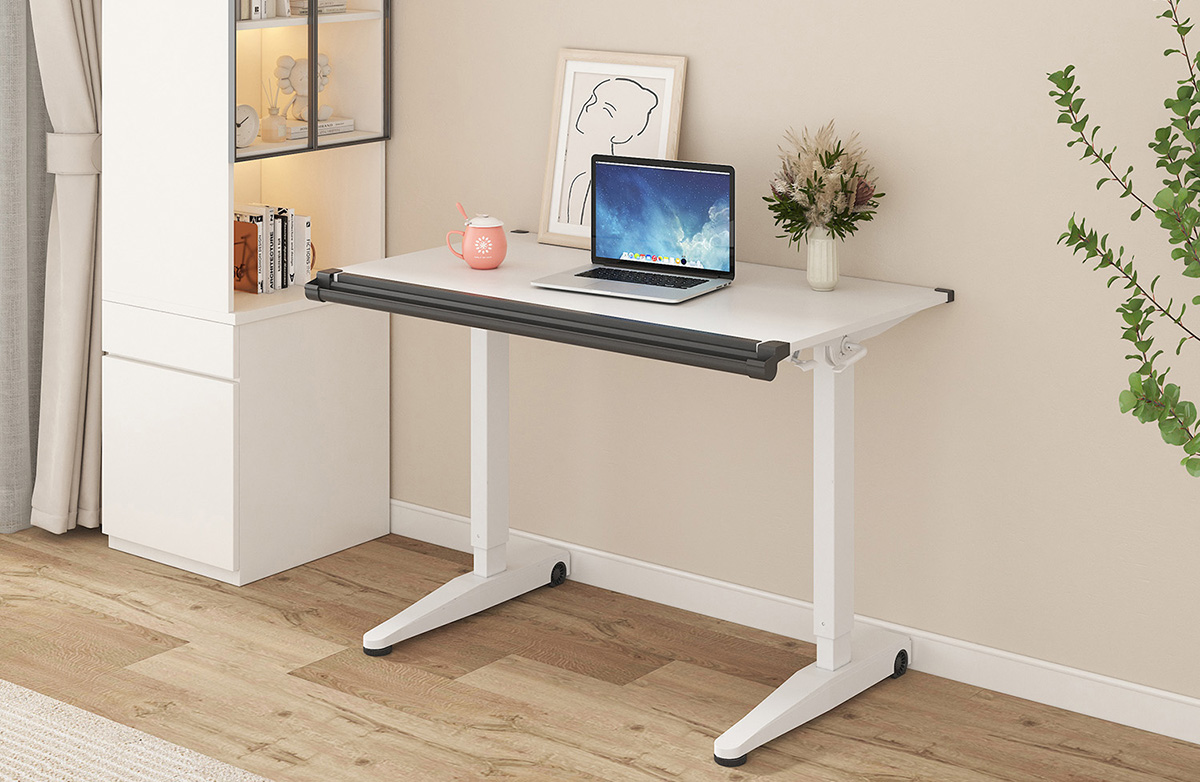
Office furniture, gaming chairs, and standing desk demand are surging together. Three product categories, three different buyer types. But if you look at the production data coming out of Guangdong in 2024 and early 2025, one thing keeps showing up across all of them: orders for chair bases, table bases, and lifting mechanisms are not slowing down.
That’s the view from the manufacturing side. Here’s what’s driving it.
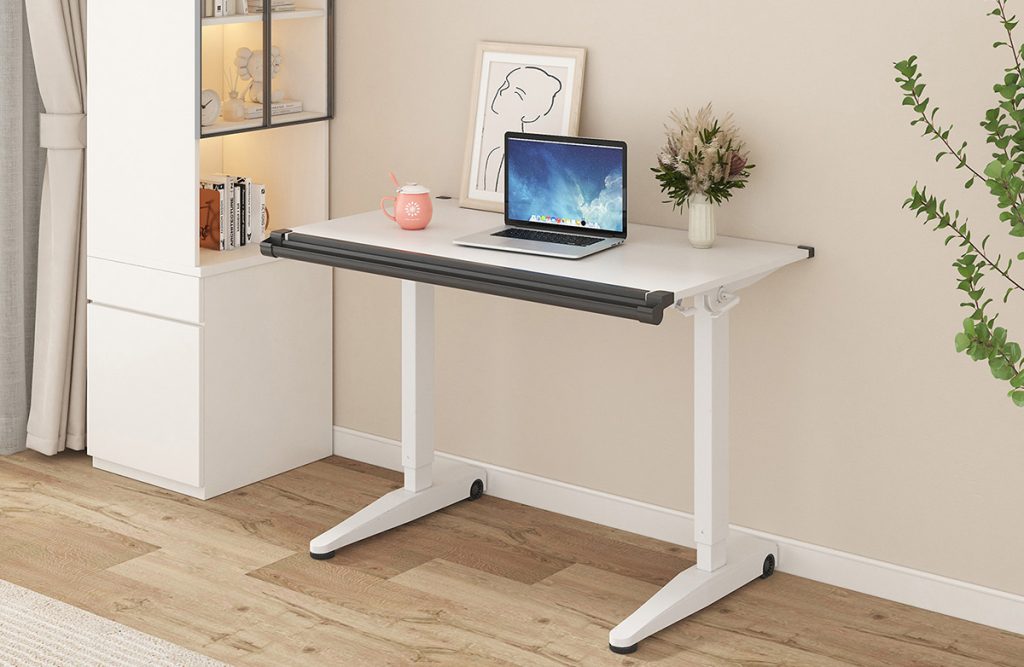
The Office Furniture Market Is Larger — and More Complicated — Than the Headlines Suggest
The global office furniture market sits somewhere between USD 65 and 107 billion in 2024, depending on which research house you’re reading and how they define the category. That spread is frustrating but it tells you something useful: the market is fragmented, definitions vary widely, and regional dynamics pull in different directions.
What most analysts agree on is the direction. Growth is steady — consensus figures cluster around a CAGR of 3–6% through 2030 — and the underlying demand drivers are structural, not cyclical.
Seating leads the category. Chairs consistently account for 31–35% of total office furniture revenue, and that share has been rising. The reason is not complicated: the shift to hybrid work did not reduce the number of chairs in the world, it multiplied the locations where people need them. A procurement manager at a 500-person company in Munich used to buy 500 chairs for one building. Now some of those people work from home offices, from coworking spaces, and from spoke offices — and each of those settings needs a chair.
Metal furniture is the fastest-growing material segment. Metal-based office furniture demand increased sharply, with shipments in 2024 rising by approximately 18% compared to 2022. This is relevant for manufacturers of chair bases and table bases specifically: metal components — alloy chair feet, steel frames, cast iron table bases — are in a stronger demand cycle right now than wood-based furniture.
Asia-Pacific is both the largest production region and the fastest-growing demand region. Asia Pacific accounts for 41.20% of the office furniture market in 2025 and is projected to grow at a 7.20% CAGR through 2031, supported by active development and expanding service-sector employment. For a manufacturer based in Foshan, that creates an interesting situation: you’re sitting inside the supply base for the world’s largest and fastest-growing furniture market simultaneously.
One headwind worth acknowledging: U.S. office vacancy rates reached approximately 20.4% in 2024 across major metro areas. High vacancy suppresses large-scale corporate procurement. This has shifted demand toward modular, flexible solutions rather than fixed-installation office buildouts — which actually benefits component manufacturers, because modular seating systems need more hardware per unit.
Gaming Chairs: Faster Growth, Different Buyer, Same Components Underneath
The gaming chair market is small by office furniture standards — somewhere between USD 1.4 and 2.5 billion in 2024 across different estimates — but it is growing faster and in a different demographic direction.
The gaming chair market is projected to reach USD 3.1 billion by 2033, at a CAGR of approximately 10.96%. That’s a double-digit growth rate sustained over a decade, which is unusual for a physical product category. What explains it?
A few things:
The convergence of gaming and work is real. Over 42% of gaming chairs are now used for both gaming and remote work. The buyer who bought a gaming chair in 2019 for their desktop setup is the same person who now uses it for eight hours of video calls. This has broadened the addressable market significantly — brands that started in esports are now competing directly with office furniture brands for the home-office buyer.
The esports infrastructure effect. The esports market was valued at USD 2.1 billion in 2024 and is projected to reach USD 10.1 billion by 2033. As professional gaming grows, so does the aspiration market around it. When a streamer with 2 million followers sits in a specific chair for 6 hours every day on camera, that chair sells. This is a marketing dynamic that traditional office furniture brands do not have access to.
Asia-Pacific is the structural growth engine. Asia-Pacific is the fastest-growing territory at a 8.98% CAGR through 2031, underpinned by USD 86.6 billion in regional game revenues recorded in 2024. China, India, and Southeast Asia are where most new gaming chair buyers are coming from.
From a component manufacturing perspective, gaming chairs are not structurally different from office chairs. They use the same five-star bases, the same gas cylinders, the same caster wheels. What differs is the tolerance spec (gaming chairs often use heavier-duty hardware to handle more aggressive use), the aesthetic requirement (matte black, textured finishes, and specific colorways dominate gaming), and the lead time expectations (gaming brands tend to launch seasonal collections and need faster ramp-up capacity from their suppliers).
The implication for a base manufacturer: a customer who supplies gaming chair brands needs exactly the same thing as an office chair customer — reliable stamped or die-cast bases with consistent finishing — but often at tighter timelines and with stronger finish consistency requirements.
Standing Desks: The Market That Keeps Growing Despite Everyone Saying It Should Have Peaked
If you were following the standing desk market in 2020–2021, you might have assumed the pandemic-driven spike would correct sharply once offices reopened. It hasn’t. The market has continued to expand at a steady pace, and the composition of demand has shifted in a way that makes it more durable.
The global standing desks market was valued at USD 8.14 billion in 2024 and is projected to reach USD 11.06 billion by 2030, at a CAGR of 5.3%. The electric height-adjustable segment — the one that requires lifting mechanisms and smart controllers — holds the dominant share.
A few dynamics worth paying attention to:
Corporate procurement has replaced residential demand as the growth driver. In 2020, most standing desk orders were individuals furnishing home offices. Corporate office refurbishment cycles, co-working space fit-outs, and educational institution classroom redesigns now represent an estimated 55–60% of unit demand in 2026, up from 35% in 2020. Corporate procurement is bulk procurement — which means more consistent, higher-volume orders for suppliers.
The commercial segment already dominates. The commercial segment held around 61% of the standing desk market share in 2025. This segment is driven by corporate wellness programs, ergonomic compliance initiatives in regulated industries (healthcare, tech), and facilities managers who are now specifying standing desks as standard rather than optional.
Smart features are becoming table stakes. In 2024, over 40% of new office desk installations in developed economies incorporated electric adjustment mechanisms. Memory height presets, anti-collision sensors, and app connectivity are now expected rather than premium. For lifting system manufacturers, this creates continuous specification pressure — buyers are always asking for one more feature at the same price point.
The Chinese manufacturing base has a structural advantage here. The primary manufacturing hubs for lifting mechanisms — Jiangsu and Guangdong — have built up significant process depth over the past decade in gas springs, linear actuators, and motor systems. That accumulated experience is not easily replicated in other regions, which is why most standing desk brands globally, regardless of where they are marketed, source their core lifting components from Chinese suppliers.
What the Convergence Means for Component Buyers
Read across all three markets and a pattern emerges: each is growing, each is shifting toward more complex and feature-rich products, and each is being supplied by a manufacturing base that is concentrated in southern and eastern China.
For B2B buyers — furniture brands, chair manufacturers, commercial furniture distributors — the practical implications are:
Supply chain consolidation is accelerating. Brands that previously sourced chair bases from one supplier, table bases from a second, and lifting systems from a third are actively looking to consolidate. Fewer supplier relationships mean less logistics complexity, lower compliance overhead (single audit instead of three), and easier coordination when a new product line requires components from multiple categories. The question is whether a single supplier can credibly handle all three.
Customization requirements are rising. In a market where standing desks are increasingly branded products (rather than commodity items), the visible components — the legs, the base, the frame finish — matter more than they did five years ago. Brands want specific dimensions, specific finishes, specific tolerances, and they want those specs locked down before volume production. Component suppliers who can support detailed mold development and pre-production sampling have a structural advantage over those who only offer standard catalog SKUs.
Lead time is the underrated differentiator. The furniture industry runs on collection cycles. If a brand launches a new chair line in September, they typically need components delivered in June or July. A supplier with 15-day standard lead times on established SKUs — and the production capacity to back it up — has real competitive value in that scenario, in a way that a 45-day supplier does not regardless of price.
Certification is now a minimum requirement, not a differentiator. BIFMA for structural testing, SGS for material compliance, RoHS for European electronics — these were once selling points. They are now simply expected. Buyers in Germany, the U.S., and South Korea will not evaluate a supplier that cannot provide documentation. The interesting shift is that buyers increasingly want to see test reports on file, not just certificates on a wall.
Where the Three Markets Intersect at the Component Level
There is a reason manufacturers who specialize in chair bases are often also well-positioned to supply table bases and lifting system accessories. The core competencies overlap more than they might appear:
- Die-casting and stamping for chair bases requires the same equipment and process control as fabricating metal table bases
- Surface finishing — powder coating, matte black, brushed stainless — is shared infrastructure across seating, table, and desk applications
- Quality systems built around BIFMA and ISO standards apply across all three product categories
- Warehousing and logistics for B2B volume shipments scales across categories without major reconfiguration
The manufacturers who have built integrated capability across these three areas have something genuinely useful to offer brands that are expanding their product lines. A gaming chair brand launching a matching desk line does not want to onboard a new supplier from scratch — they want to extend the relationship they already have, if that relationship can handle the requirement.
Looking at the Numbers Practically
Rather than citing a single forecast as definitive — the range across market research houses is too wide to treat any one figure as ground truth — the more reliable signal is directional:
- Office furniture (metal components especially): steady growth, 3–7% annually, driven by corporate wellness and hybrid work infrastructure
- Gaming chairs: faster growth, 8–11% annually, driven by esports culture, convergence with work setups, and expanding Asian markets
- Standing desks (electric, commercial-grade): consistent growth, 5–7% annually, with corporate procurement now the primary driver
All three point in the same direction. All three rely on the same upstream supply chain. And all three are in markets where lead time, certification, and customization capability matter more than unit price alone.
For furniture brands evaluating their component supply strategy, that’s the landscape as of mid-2025.
OneNest Furnitech manufactures chair bases, custom table bases, and lifting system components from three integrated production facilities in Foshan and Changzhou, China. Products are exported to 40+ countries across North America, Europe, and Asia-Pacific.